

- Published:
- Wednesday 19 August 2026 at 10:33 am
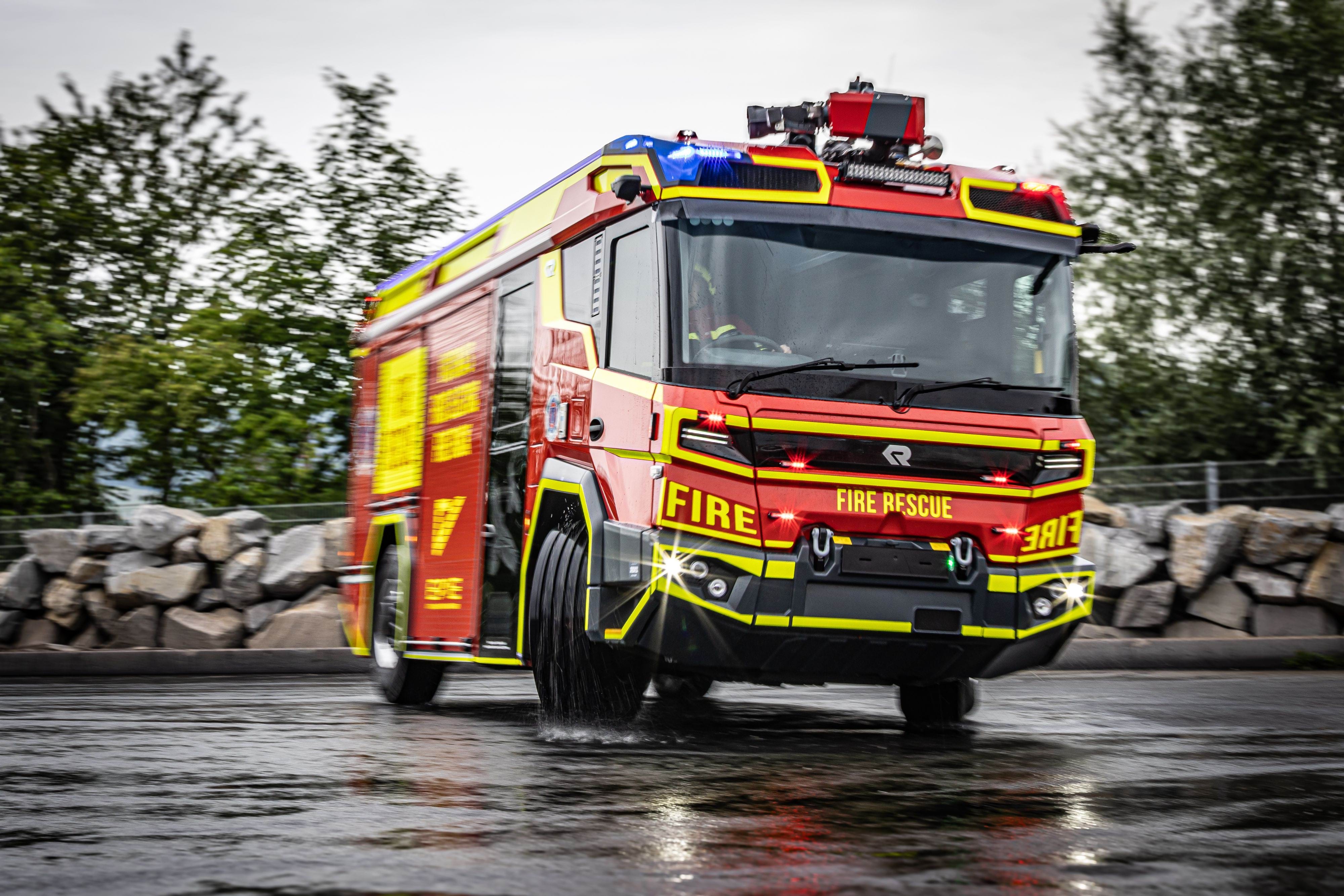
Victoria’s first electric fire truck is bringing faster life-saving assistance to the public by cutting response times to house fires and medical emergencies.
An average improvement of 11 percent in response times has been revealed from rigorous real-world testing of the Electric Vehicle for Incident and Emergency, known as EVIE, for short.
The findings of EVIE’s trial are fully detailed in a new report from Fire Rescue Victoria, entitled ‘Leading the Charge’, released today.
Fire Rescue Commissioner Gavin Freeman AFSM said EVIE has been evaluated on its performance in Victorian inner-city, industrial and suburban environments.
“This evaluation clearly demonstrates the potential operational benefits that EVIE offers to FRV’s core mission of the protection of life and property,” said Commissioner Freeman.
“EVIE has the potential to enhance frontline response capabilities, improve firefighter effectiveness and deliver measurable benefit to the Victorian community.
“EVIE is operationally capable of performing as a frontline firefighting appliance and, across many key operational measures, outperformed conventional diesel pumpers.”
EVIE, a Rosenbauer RT appliance, built in Austria to FRV specifications, was delivered in late 2024 and put into trial service in 2025.
During the trial EVIE responded to more than 500 incidents and covered more than 4,700KM.
Of these, more than 400 incidents enabled a direct comparison against the performance of a conventional diesel fire truck.
“Notably, there were pronounced gains in activities directly linked to early intervention where rapid response is critical,” said Commissioner Freeman.
“The trial showed that EVIE arrived on scene faster in 72 percent of incidents, achieving an average time saving of 26 seconds. This, coupled with design improvements to the vehicle, has made a real difference.”
With Emergency Medical Responses, EVIE enabled crews to achieve a 33 second improvement in intervention time – a significant improvement on the typical time.
Time savings were also identified across a range of other operational response activities.
The Minister for Emergency Services Paul Edbrooke said the results of the report are overwhelmingly positive.
“In an emergency, every second matters. These improvements have the potential to make a life-saving difference,” said Minister Edbrooke.
Commissioner Freeman agreed, “These findings will help inform future appliance design, training requirements and evidence-based decision making for potential fleet integration.”
“In addition to the operational performance improvements shown during the trial, EVIE reduced carbon emissions by up to 90 percent compared with conventional diesel fire appliances.
“This demonstrates that FRV can reduce fleet emissions while simultaneously improving frontline emergency response for the Victorian community.”
Minister Edbrooke added: “The introduction of battery-electric fire appliances has the potential to support FRV’s commitment to achieving net-zero emissions by 2045 without compromising operational capability.
“In fact, the evaluation indicates that the technology can deliver measurable improvements in operational performance.
“This report provides a strong foundation for informed decision making, not only for FRV but also for the broader emergency services sector across Victoria, Australia and the world.”
- Read "Leading the Charge - An economic and operational analysis of battery electric fire service vehicles" on our Publications page under 'Research'.
Updated