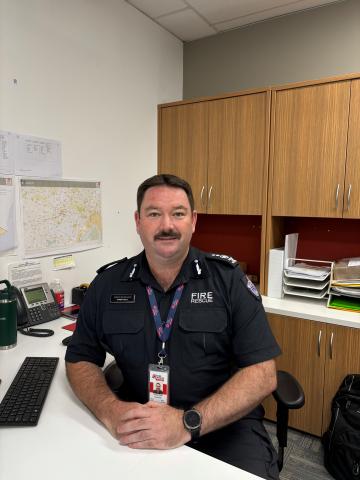
Commander Damien Scott
After a career in aviation firefighting with Airservices Australia, Commander Damien Scott was looking for a new challenge. One that would broaden his operational experience and allow him to lead in a more diverse emergency environment. Joining FRV through a lateral pathway in 2022, Damien brought with him a strong background in high-risk, high-consequence incident response.
“In aviation firefighting, you’re trained to operate in critical situations where time and decisions really matter,” Damien says. “That foundation translates well, but moving into FRV has expanded the scope of what I’m involved in.”
For Damien, the transition into a broader emergency services role has been both challenging and rewarding.
“You’re dealing with a wider range of incidents, different communities, and working closely with volunteer brigades,” he says. “It adds a new dimension to leadership - you’re not just responding, you’re supporting capability across an entire district.”
One of the standout aspects for Damien has been the collaborative environment.
“The integration between agencies is a real strength,” he says. “You’re working alongside highly capable people, and there’s a strong focus on shared outcomes for the community.”
Now operating as a Commander within FRV, Damien values the variety and impact of the role.
“It’s a role where your experience counts, but you’re also constantly learning,” he says. “If you’re coming from a background like aviation firefighting and looking to broaden your leadership, this is a great place to do it.”
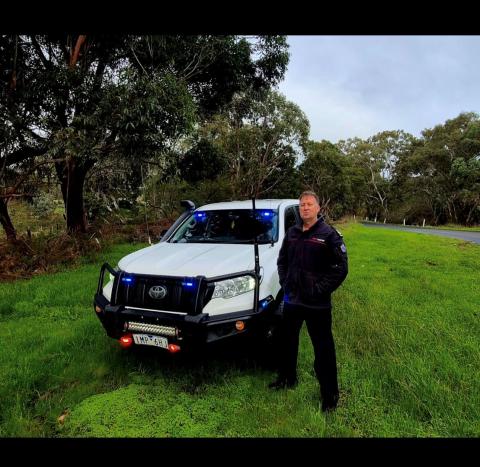
Commander Chris Manuel
After building his career in the Northern Territory, Commander Chris Manuel was ready to take on a new challenge - bringing his experience with the Northern Territory Fire and Rescue Service into FRV.
Chris had already developed strong operational leadership in a demanding and often remote environment, but the opportunity to work within Victoria’s complementary fire service model offered a new level of scale and complexity.
“In the Territory, you’re used to working in dynamic conditions with limited resources,” Chris says. “That experience prepares you well, but coming to FRV exposes you to a much broader operational landscape.”
Since joining FRV, Chris has embraced the diversity of the role and the opportunity to work across both metropolitan and regional settings.
“You’re dealing with different risk profiles, higher population density and a strong volunteer network through CFA,” he says. “It really challenges you to adapt your leadership and think differently.”
For Chris, one of the most rewarding aspects has been the ability to influence outcomes beyond individual incidents.
“You’re not just responding - you’re helping shape capability, supporting brigades, and contributing to how the system operates as a whole,” he says.
Now established within FRV, Chris sees the move as a natural progression for experienced fire service leaders.
“If you’re already operating at that level and want to test yourself in a larger, more complex environment, this is a great opportunity.”