
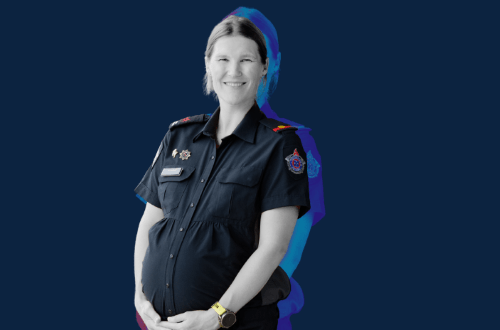
After a few years as a ranger with Parks Victoria, Lucy decided her next step was to become a firefighter.
“Every year, we supported the bushfire response,” she says of her time as a ranger.
“A colleague was going through the recruitment process to become a career firefighter, so I looked into it.
“I gave it a go and was lucky to get through.”
A decade into her firefighting career, Lucy absolutely loves her job and recommends it to anyone who’s interested.
“It’s a fantastic job,” she says.
“You meet so many great people doing it. You have to work hard to get in, but it’s so worth it.”
The mum of two – soon to be three – says that shift work suits her young family and offers a great work-life balance.
“I get to be home with the kids more than people working 9–5,” she says.
“When I disclosed my pregnancy to FRV’s Women’s Support Unit, they helped me find a meaningful day-work role.”
Lucy encourages women who are looking for opportunities to serve the community, stay active and develop professionally to apply to become a firefighter, saying that steps like study and interview preparation can make all the difference.
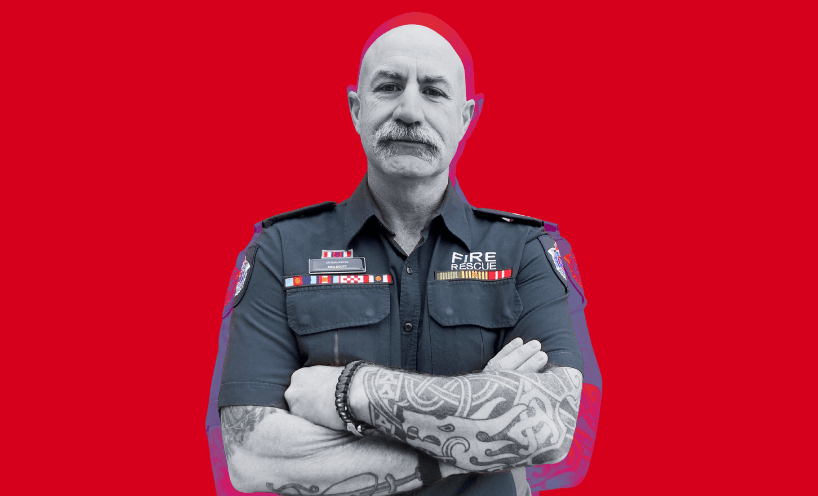
Reg was already a first responder when he joined Victoria’s fire services in 2001.
“I still wanted to serve the community, but I was after more job satisfaction – and I’ve certainly gotten that as a firefighter,” shares Reg.
Now, after 25 years in the job, Reg has many noteworthy achievements under his belt, including becoming a Station Officer, fire investigator and Heavy Rescue Operator.
For the past decade, he’s volunteered with the road safety charity Amber Community, sharing his experiences as a first responder and advocating for positive behaviour changes among drivers.
Reg says that great firefighters are naturally inquisitive problem-solvers who want to make an impact in the community.
“It doesn’t matter what your work experience or background is; a firefighter is someone who wants to help people and find solutions.”
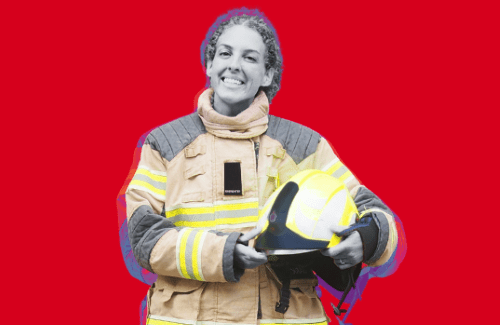
After achieving the incredible milestones she set for herself as a shearer, Emily Barker decided her next step was to become a career firefighter.
Emily’s been a jillaroo on the other side of the world and started her own shearing business, but these days she wouldn’t trade firefighting for anything.
“I’m beyond grateful for the situation that I find myself in daily,” says Emily.
She says there’s a kind of longevity, growth and stability in an operational career with FRV that she could only dream of as a shearer.
“I've never met a firefighter who isn’t a long-termer or planning on staying in the job for the long term,” she says.
Three years into her career at FRV, and Emily’s still excited by the range of opportunities FRV offers.
“There are so many different avenues that you can take with FRV – that was one of the most appealing factors of becoming a firefighter,” she says.
“My best friends are in the emergency services. They asked me, ‘Have you ever thought about being a firefighter? You get to work in a team, every day is different, you’re not tied to a desk, and you still get to get out and about in the community.’ I said, ‘Sign me up!’”
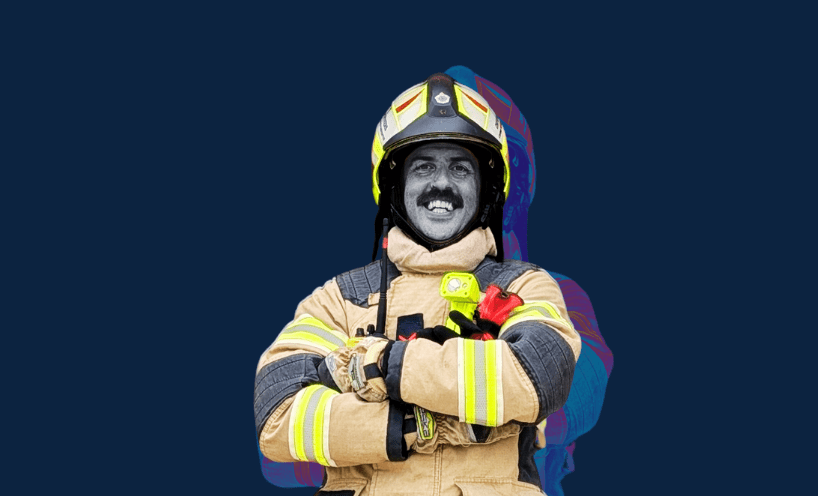
Craig was working as an electrical linesperson for a decade but always had an inkling his next step might be to join the emergency services.
The Leading Firefighter has family ties to the police, but felt he was more suited to the hands-on work of firefighters – and could still apply his electrical trade at jobs like rescues and motor vehicle accidents.
“My dad was a police officer for 35 years, and my wife’s been one for 15 years now,” Craig says.
“I wanted to serve the community like them, but thought my skillset was more suited to practical emergency response.
“Firefighters are the ones putting fires out, performing emergency medical response and rescues. That’s what I wanted to do.”
Now based at Fire Rescue Victoria’s (FRV) Wodonga Fire Station, Craig loves the work-life balance of an operational career while living regionally.
He’s a proud Dharawal man, and says that FRV has provided him opportunities to connect with mob and progress the organisation’s Reconciliation Action Plan.
“Meeting other Indigenous people within FRV has made me even prouder of my heritage and offered me the chance to follow in the footsteps of our strong Indigenous leaders and role models.”
Updated